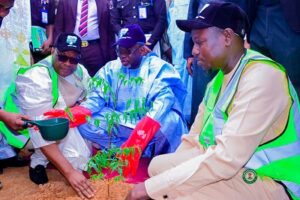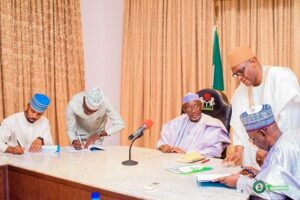
The Jigawa State Government, through the Ministry of Environment and Climate Change, has convened a high-level stakeholders’ meeting aimed at strengthening environmental protection measures and advancing climate change mitigation efforts across the state.
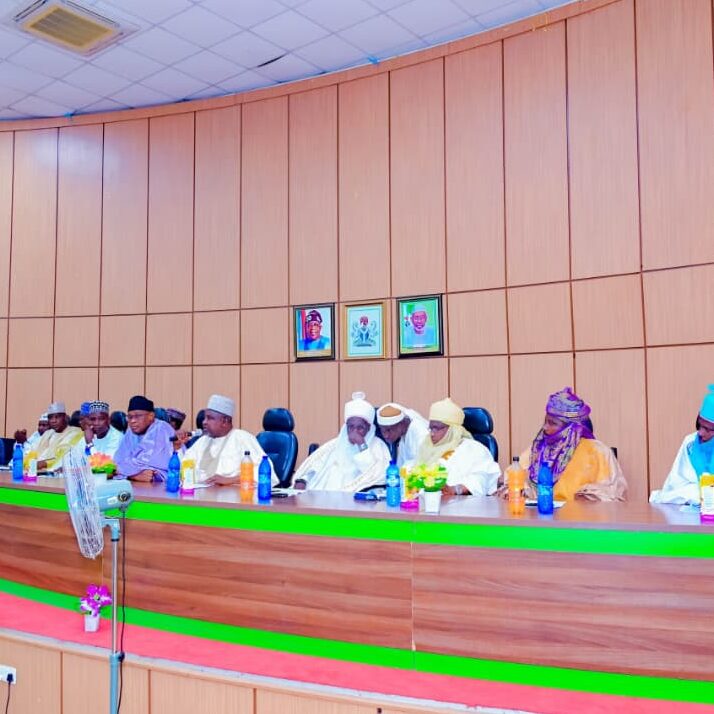
The meeting, held at the Sir Ahmadu Bello Conference Hall, State Government Secretariat, Dutse, brought together key stakeholders, including local government chairmen, government officials, environmental experts, traditional institutions, and development partners to deliberate on sustainable strategies for addressing pressing environmental challenges confronting the state.
peaking during the meeting, the Honourable Commissioner for Environment and Climate Change, Dr. Nura Ibrahim, expressed deep concern over the increasing environmental threats facing the state. He highlighted illegal logging for timber, charcoal production, poor sanitation practices, indiscriminate waste disposal, and other forms of environmental degradation as major factors contributing to pollution and intensifying the adverse impacts of climate change.
Dr. Ibrahim emphasized the urgent need for collective action and strengthened collaboration among local government authorities, relevant government agencies, community leaders, and other stakeholders in combating deforestation and promoting environmental sanitation.
He noted that environmental protection remains a shared responsibility, stressing that sustainable management of natural resources is essential for safeguarding the well-being of both present and future generations.
It is imperative that we join forces to protect our environmental resources, reduce activities that contribute to environmental degradation, and ensure cleaner and healthier communities for the benefit of all,” the Commissioner stated.
In his remarks, the Honourable Commissioner for Local Government and Community Affairs, Alhaji Ibrahim Muhammad Garba (Hannun Giwa), described the meeting as timely and crucial, considering the growing impacts of climate change being experienced across various parts of the country.
He observed that excessive tree felling and illegal logging for timber and charcoal have significantly contributed to climate change, with far-reaching consequences on agriculture, livestock production, food security, and the overall livelihoods of citizens.
The stakeholders’ meeting provided a strategic platform for participants to discuss practical approaches towards strengthening environmental governance, curbing illegal logging activities, improving sanitation practices, and developing sustainable interventions to mitigate the effects of climate change in Jigawa State.
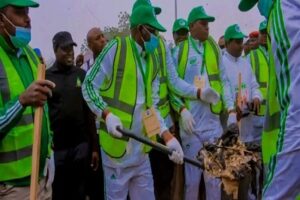
As part of efforts to encourage excellence and healthy competition among local government councils in environmental management, the Department of Environmental Health and Pollution Control presented an award of recognition to the Local Government Council adjudged as the best-performing based on established assessment indicators used during the monthly environmental sanitation exercises. The award was aimed at appreciating outstanding commitment to environmental cleanliness, effective sanitation practices, and adherence to environmental protection standards, while motivating other local government areas to strengthen their efforts towards achieving a cleaner and healthier Jigawa State.
The Jigawa State Government reaffirmed its commitment to implementing policies and initiatives that promote environmental sustainability, enhance climate resilience, and ensure a cleaner, safer, and healthier environment for all residents of the state.